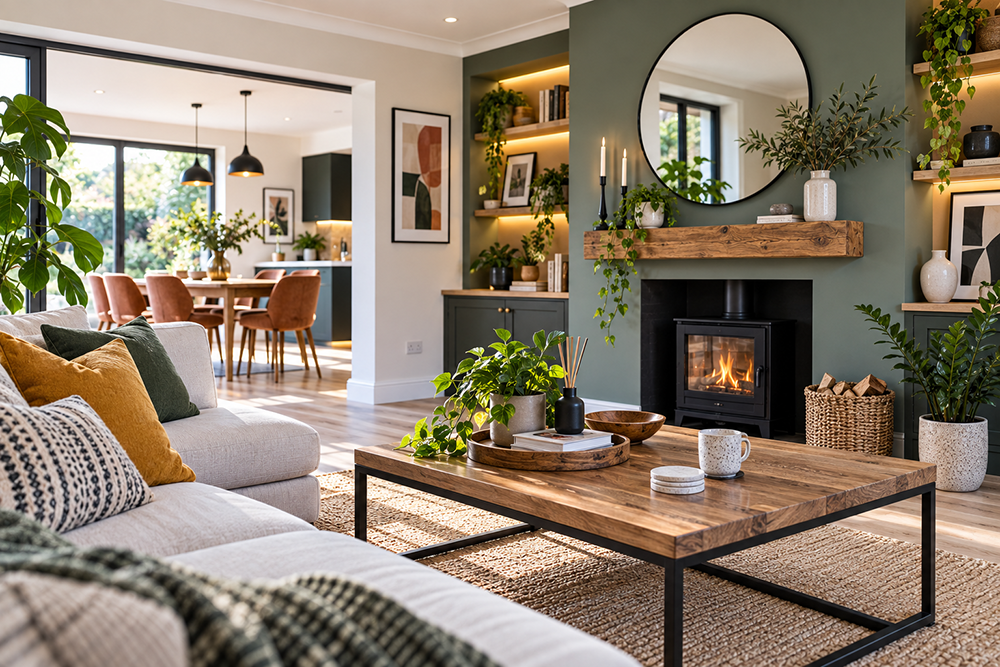
Not every home improvement project needs to involve knocking down walls, extending the property or completely redesigning the layout. In many homes, relatively straightforward changes can make rooms feel brighter, more practical and noticeably more modern without the disruption and cost associated with major structural work.
The key is to look at the existing space carefully and identify the areas that are making it feel dated, awkward or difficult to use. Sometimes the biggest improvements come from updating finishes, improving lighting, creating better storage or refreshing individual rooms rather than starting again from scratch.
Here are several renovation ideas that can make a substantial difference while keeping the existing structure of the property largely unchanged.
Refresh Walls and Woodwork
Decorating is one of the simplest ways to change how a room feels, but a successful refresh involves more than choosing a new paint colour.
Older walls may have cracks, dents, uneven areas or layers of previous paint that need attention before decorating begins. Proper preparation can make a significant difference to the finished appearance.
Skirting boards, door frames and internal doors are also worth considering. Freshly painted woodwork can make an older room feel much cleaner and more finished, particularly where existing paint has yellowed, chipped or become heavily marked.
Neutral colours remain popular because they are easy to live with and work well with different furniture and accessories. However, adding colour through a feature wall, cabinetry or soft furnishings can help prevent a room from feeling too plain.
Improve the Lighting
Lighting is often overlooked during smaller renovation projects, even though it can completely change the atmosphere of a room.
A single ceiling light may provide enough illumination, but it rarely creates the most comfortable or flexible environment. Combining different types of lighting usually produces a better result.
This might include:
- ceiling lights for general illumination
- wall lights or lamps for softer lighting
- task lighting in kitchens and work areas
- lighting inside or underneath cabinets
- carefully positioned lights around mirrors
Natural light should also be considered. Heavy curtains, oversized furniture near windows or dark finishes can make a room feel smaller than it really is.
Simply allowing more daylight into the room can sometimes make as much difference as installing new lighting.
Update an Existing Kitchen
A kitchen does not always need to be completely replaced.
If the existing cabinets are structurally sound and the layout works well, updating individual elements may provide a much more cost-effective improvement.
Possible changes include replacing:
- cabinet doors
- handles
- worktops
- splashbacks
- taps
- lighting
- flooring
Cabinet doors can sometimes be painted or refinished rather than replaced completely.
Changing a dated splashback can also make a surprisingly large visual difference, particularly if the new finish works better with the worktops and cabinet colours.
When planning any kitchen update, it is worth looking at the room as a whole rather than treating each element separately. Colours, materials and finishes should work together rather than competing for attention.
Repair or Refresh Flooring
Flooring covers a large proportion of every room, so worn or outdated floors can affect the appearance of the entire property.
However, replacement is not always necessary.
Timber floors may be suitable for sanding and refinishing. Some tiled floors can be professionally cleaned and regrouted, while carpets may simply need a thorough clean if they are otherwise in good condition.
Where replacement is needed, think about the way the room is used before choosing a material.
High-traffic spaces such as hallways and kitchens generally benefit from durable, easy-to-clean surfaces, while bedrooms and living rooms may prioritise warmth and comfort.
Consistency between adjoining rooms can also help a property feel more connected.
Add Better Storage
Lack of storage is one of the most common reasons a home begins to feel cluttered.
Adding more furniture is not always the solution. In smaller rooms, too many freestanding units can actually reduce usable space.
Instead, look for areas that could be used more efficiently.
Examples include:
- alcove shelving
- fitted wardrobes
- cupboards beneath stairs
- storage benches
- wall-mounted shelving
- built-in media units
- tall kitchen cabinets
Using the full height of a room can be particularly useful where floor space is limited.
Good storage should make everyday items easy to access while allowing less frequently used belongings to remain out of sight.
Refresh the Bathroom Without Changing the Layout
Bathrooms can be expensive to remodel when plumbing positions are changed. Keeping the existing arrangement of the bath, shower, toilet and basin can reduce both cost and disruption.
Even without moving the plumbing, there are many ways to update the room.
This could include replacing:
- taps
- shower fittings
- mirrors
- lighting
- vanity units
- screens
- tiles
- accessories
Regrouting existing tiles or replacing old silicone around baths and showers can also make a bathroom look considerably fresher.
If new tiles are being installed, think carefully about scale, colour and grout lines. Large tiles can create a cleaner appearance, while smaller or more decorative tiles can work well as feature areas.
Ventilation should also be reviewed, particularly in older bathrooms where condensation may be an ongoing problem.
Make Better Use of Natural Light
Homes often feel more spacious when natural light can travel freely through them.
This does not necessarily require adding new windows.
Small changes can include:
- replacing heavy window coverings
- using lighter wall colours
- positioning mirrors opposite windows
- reducing bulky furniture near natural light sources
- using glazed internal doors where appropriate
Mirrors can be especially useful in narrow hallways, bathrooms and smaller bedrooms because they reflect both light and views back into the room.
The goal is not simply to make everything brighter, but to make better use of the daylight already entering the property.
Update Interior Doors and Hardware
Internal doors are often ignored during renovation projects, yet they are visible throughout the home.
Replacing damaged or dated doors can immediately improve the overall finish of a property. In some cases, existing doors may only need repainting and new handles.
Door handles, hinges and other small fittings can also help bring different rooms together visually.
Choosing a consistent style across the property can make individual rooms feel like part of one considered design rather than a series of unrelated updates.
Coordinate the Finishing Details
The final details are often what make a renovation feel complete.
Light switches, sockets, handles, taps, trims and other small fittings should not necessarily become focal points, but obvious inconsistencies can make a newly renovated room feel unfinished.
It is usually better to choose a small number of complementary finishes and use them consistently.
For example, if black fittings are used in one area, repeating the same finish elsewhere may create a stronger overall look than introducing several different metal colours.
The same applies to timber tones, paint finishes and decorative details.
Focus on the Improvements That Solve Real Problems
Renovation does not need to be dramatic to be worthwhile.
A home that feels dark may benefit more from improved lighting and lighter finishes than from major building work. A cluttered room may simply need better storage. A tired kitchen may look completely different with updated doors, handles and splashbacks.
Before committing to larger structural work, consider whether the existing layout already works reasonably well.
Improving what is already there can often produce a more comfortable home while keeping costs, disruption and project timescales under better control.
The best renovation decisions are usually the ones that improve both appearance and everyday usability. By focusing on practical problems first and coordinating the finishes carefully, it is possible to make a substantial difference without completely rebuilding the property.