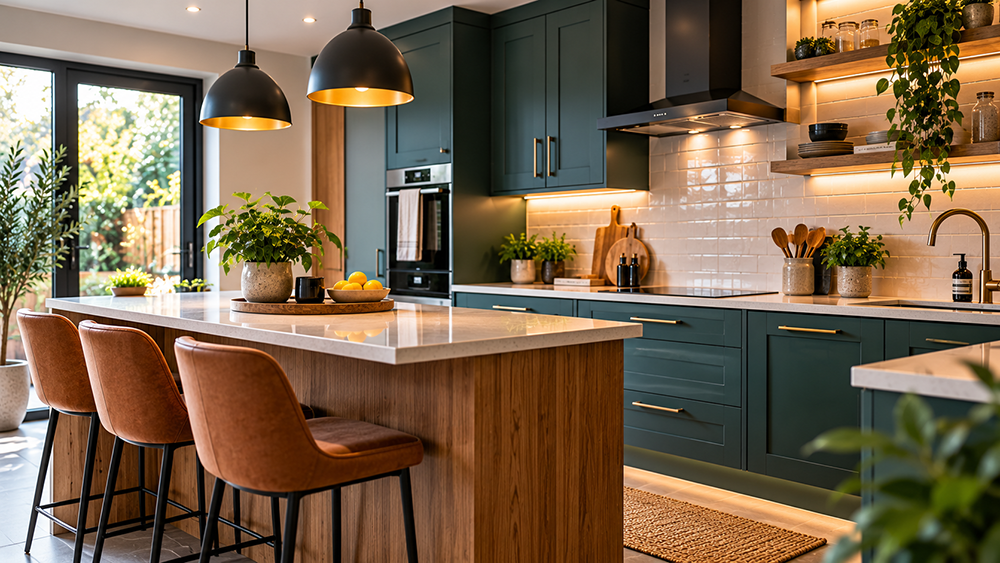
A full kitchen renovation can completely transform a home, but it is not always necessary. If the existing layout works and the cabinets are still in reasonable condition, smaller changes can often refresh the room for much less money and with far less disruption.
The key is to focus on the elements that have the biggest visual and practical impact. Worktops, cabinet fronts, lighting, splashbacks, handles and flooring all influence how a kitchen feels, and updating only a few of them can make the entire space look more considered.
Here are some practical ways to improve a kitchen without starting again from scratch.
Start With What Already Works
Before replacing anything, look carefully at the current kitchen and decide which parts are actually causing problems.
Ask yourself:
- Does the layout work well?
- Are the cabinets structurally sound?
- Is there enough storage?
- Are the worktops damaged or simply dated?
- Is the room too dark?
- Are the colours making the space feel smaller?
- Is the flooring difficult to maintain?
Keeping the elements that still work well can free up more of the budget for the areas that need genuine improvement.
It can also help reduce waste and shorten the amount of time the kitchen is out of use.
Refresh Cabinet Doors
Cabinet doors take up a large amount of visual space, so updating them can completely change the appearance of the kitchen.
If the cabinet carcasses are still in good condition, replacing the doors may be much cheaper than installing an entirely new kitchen.
Depending on the material, existing doors may also be suitable for repainting.
Before painting, preparation is important. Surfaces usually need to be thoroughly cleaned, lightly sanded and primed with products suitable for the existing finish.
Colour can make a major difference. Deep greens, navy, warm neutrals and muted earthy tones can all create a strong look when balanced with suitable worktops and flooring.
Change the Handles
Changing kitchen handles is one of the easiest improvements to make.
Small details can have a surprisingly strong effect, particularly if the existing handles look dated or do not match other finishes in the room.
Popular choices include:
- black
- brushed brass
- stainless steel
- bronze
- simple timber handles
If replacement handles use the same fixing centres as the old ones, the change can be particularly straightforward.
Try to coordinate the finish with other visible details such as taps, light fittings or door hardware without making everything look too perfectly matched.
Update the Splashback
A splashback is practical, but it is also an opportunity to add colour, texture or contrast.
Replacing an old splashback can make a kitchen feel significantly fresher without affecting the main layout.
Options include:
- ceramic tiles
- porcelain tiles
- glass panels
- stone-effect surfaces
- compact laminate
- decorative mosaics
Think about how the splashback will work with the worktops and cabinet colour.
A highly patterned surface may work best with simple cabinetry, while a quieter splashback can balance more colourful kitchen units.
Grout colour also matters. A contrasting grout can emphasise the tile pattern, while a closer match usually creates a more continuous appearance.
Improve the Lighting
Kitchen lighting should be both practical and comfortable.
One central ceiling light may not provide enough illumination for food preparation, particularly beneath wall cabinets.
Consider combining different types of lighting:
- ceiling lighting
- pendant lights
- under-cabinet lights
- lighting inside glazed cabinets
- feature lighting over an island or dining area
Under-cabinet lighting is particularly useful because it puts light directly onto the worktop.
The colour temperature of the lighting can also affect how the kitchen feels. Very cold lighting can make the room appear clinical, while warmer lighting usually creates a softer atmosphere.
Replace or Refresh the Worktops
Worktops are another large visual element.
If they are damaged, stained or badly worn, replacing them can make a major difference even if the cabinets remain unchanged.
Before choosing a material, think about:
- durability
- heat resistance
- stain resistance
- maintenance
- cost
- the weight of the material
- how easy it will be to replace later
Laminate worktops can be practical and affordable, while timber, composite and stone surfaces each have their own maintenance requirements.
The most expensive option is not automatically the best choice for every kitchen.
Make Better Use of Storage
A kitchen can feel cluttered even when it technically has plenty of cupboards.
Sometimes the problem is not the amount of storage, but how it is organised.
Possible improvements include:
- internal drawer organisers
- pull-out storage
- shelf risers
- pan drawers
- spice racks
- door-mounted storage
- better use of tall cabinets
Frequently used items should be easy to reach, while less common items can be stored higher up or further back.
Good organisation can make an existing kitchen feel much more practical without changing the external appearance at all.
Consider Open Shelving Carefully
Open shelving can make a kitchen feel lighter and give you somewhere to display attractive everyday items.
However, it works best when used selectively.
Too much open shelving can create visual clutter and may require more frequent cleaning, particularly near cooking areas.
A small section of shelving can work well for:
- glasses
- mugs
- cookbooks
- plants
- frequently used bowls
- decorative pieces
Try to keep enough closed storage so that less attractive everyday items can remain out of sight.
Refresh the Flooring
Kitchen flooring needs to cope with spills, foot traffic and frequent cleaning.
If the existing floor is badly worn, replacing it can help the entire room feel newer.
Suitable options vary depending on the property and budget, but may include:
- porcelain tiles
- luxury vinyl
- engineered wood
- suitable laminate
- natural stone
Think about how the floor connects with neighbouring spaces.
Using similar tones or materials can help create better visual continuity, particularly in open-plan homes.
Repaint the Walls
Wall colour can change how the kitchen feels without requiring any major work.
Lighter colours may help brighten darker spaces, while stronger colours can add character when used carefully.
Consider how the wall colour works with:
- cabinetry
- worktops
- flooring
- splashbacks
- natural light
It is usually worth testing paint samples in the actual room.
Colours can look very different under artificial lighting and at different times of day.
Upgrade the Tap
A new tap can improve both appearance and usability.
If the current tap is awkward, leaking or simply dated, replacing it may be worthwhile.
Think about:
- height
- reach
- handle position
- finish
- ease of cleaning
- compatibility with the sink
A pull-out spray head can be useful in larger sinks, while simpler designs may suit compact kitchens better.
As with handles and lighting, the tap finish can also help bring the overall design together.
Pay Attention to the Small Details
Kitchens contain many individual finishes, and inconsistency between them can make the space feel unfinished.
Look at:
- sockets
- switches
- handles
- taps
- trims
- lighting
- accessories
- stools or dining chairs
They do not all need to match exactly, but there should be some sense of coordination.
A small number of repeated colours or materials can help the kitchen feel more intentional.
Avoid Trying to Change Everything at Once
One of the biggest advantages of a lighter kitchen refresh is that it can be carried out in stages.
For example, you might:
- repaint the walls
- replace handles
- update the lighting
- change the splashback
- replace the worktop later
This approach can spread the cost and make it easier to decide which changes are actually necessary.
It also reduces the chance of replacing perfectly usable elements simply because other parts of the room are being updated.
Final Thoughts
A kitchen does not always need a complete renovation to feel significantly better.
If the existing layout works, relatively simple changes to cabinet fronts, lighting, worktops, splashbacks, storage and finishes can make the room feel cleaner, brighter and more modern.
The most effective improvements usually come from identifying what is genuinely dated or impractical rather than replacing everything automatically.
By working with the existing kitchen and making a few carefully chosen changes, it is possible to achieve a noticeable transformation while keeping costs and disruption under much better control.