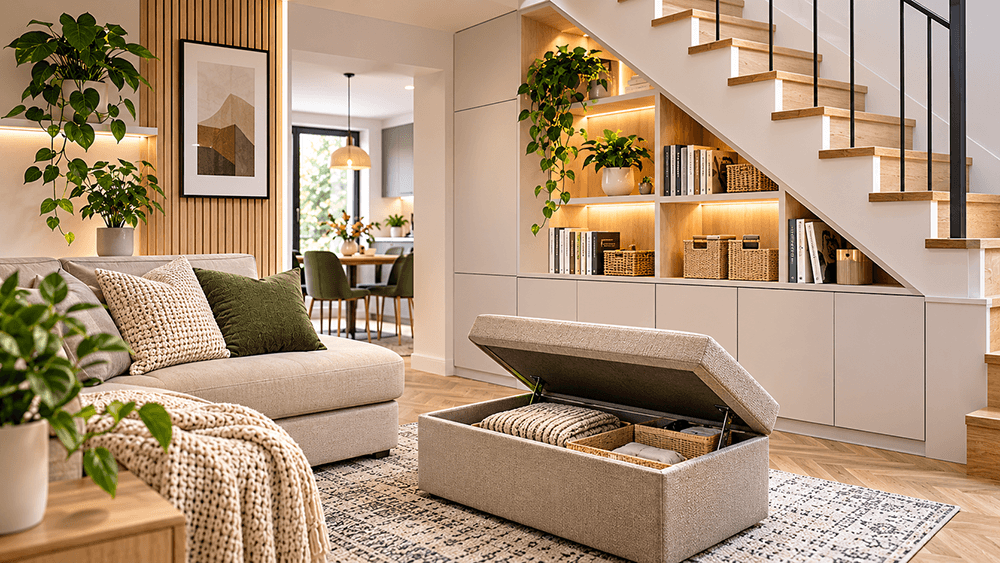
Living in a smaller home does not necessarily mean having to compromise on comfort, practicality or appearance. With thoughtful planning, even compact rooms can provide plenty of useful storage while remaining attractive and comfortable to spend time in.
The challenge is often not simply a lack of space, but how the available space is being used. Awkward corners, underused walls and poorly organised cupboards can all make a home feel more cluttered than it needs to be.
Fortunately, improving storage does not always require expensive fitted furniture or extensive renovation work. Small adjustments, carefully selected furniture and a little creativity can make a noticeable difference.
Here are some practical storage ideas that can help make better use of a smaller home without sacrificing its character.
Make Better Use of Vertical Space
When floor space is limited, walls can provide valuable additional storage.
Tall shelving units, wall-mounted cabinets and floating shelves allow belongings to be stored without taking up as much usable floor area.
In living rooms, shelving can accommodate books, decorative objects and everyday essentials. In kitchens, wall-mounted rails or shelves can provide extra space for frequently used items.
However, filling every wall with storage can make a room feel crowded.
Try to balance practical shelving with areas of clear wall space. A few carefully arranged shelves often create a more attractive result than covering an entire room with cabinets.
For heavier storage, ensure wall fixings are appropriate for the wall construction and expected load.
Choose Furniture That Serves More Than One Purpose
Multifunctional furniture can be particularly useful in compact homes.
Instead of choosing furniture purely for appearance, look for pieces that provide additional practical benefits.
Examples include:
- Ottoman beds with storage beneath the mattress
- Coffee tables with drawers or shelving
- Storage benches for hallways
- Footstools with removable lids
- Dining tables with built-in storage
- Sofas with integrated compartments
These pieces can reduce the need for separate cupboards or shelving units.
A storage bench in a hallway, for example, provides somewhere to sit while putting on shoes as well as a place to keep footwear, bags and accessories.
The key is choosing furniture that suits the room’s proportions. An oversized storage sofa may provide plenty of space internally but leave the room feeling cramped.
Use Awkward Corners More Effectively
Many homes contain areas that are difficult to furnish.
Alcoves, recessed walls, narrow gaps and sloping ceilings can all create spaces that standard furniture does not use particularly well.
Rather than leaving these areas empty, consider whether they could accommodate:
- Narrow shelving
- Small cupboards
- Built-in bookcases
- Corner desks
- Decorative storage baskets
- Bespoke cabinets
Alcoves beside chimney breasts can be especially useful for shelving or fitted cupboards.
In loft rooms, low-height storage can sometimes make better use of the space beneath sloping ceilings.
Before ordering furniture, take accurate measurements and account for skirting boards, sockets, doors and any access requirements.
Create a More Organised Hallway
Hallways are often among the smallest areas of a home, yet they need to accommodate coats, shoes, bags and other everyday items.
Without suitable storage, these belongings can quickly make an entrance feel untidy.
A narrow shoe cabinet may be more practical than an open shoe rack, particularly where the hallway is quite tight.
Wall hooks can provide useful storage for coats and bags, while a small shelf can create somewhere to leave keys and other essentials.
If space allows, a combination of closed cabinets and a small bench can create a particularly practical entrance.
Avoid adding furniture that restricts movement or obstructs doors and escape routes.
A well-organised hallway should make arriving home easier, not create another obstacle to navigate.
Improve Storage Inside Existing Cupboards
Before buying additional furniture, take a closer look inside the cupboards and wardrobes already available.
Many storage spaces are not being used efficiently.
Tall kitchen cupboards, for example, may contain large gaps between shelves, while wardrobes often have unused space beneath hanging clothes.
Simple improvements might include:
- Additional shelves
- Drawer dividers
- Pull-out baskets
- Stackable storage containers
- Hanging organisers
- Shelf risers
- Adjustable wardrobe fittings
These changes can increase practical storage capacity without requiring more furniture.
It is also worth grouping similar belongings together so that items can be found quickly.
An organised cupboard is considerably more useful than one where everything has simply been pushed out of sight.
Make Bedrooms Work Harder
Bedrooms need to provide a comfortable environment for sleeping, but they often also accommodate clothing, bedding and personal belongings.
In smaller bedrooms, freestanding furniture can quickly consume valuable space.
Beds with built-in drawers or lift-up storage compartments can be useful for keeping spare bedding and seasonal clothing.
Where possible, wardrobes that extend closer to the ceiling can provide additional storage for less frequently used items.
Bedside tables with drawers may be more practical than simple open tables, while wall-mounted bedside lighting can free up surface space.
Try to keep the area around the bed relatively uncluttered.
A room with adequate storage and fewer visible belongings often feels calmer, even if its actual dimensions remain unchanged.
Consider Built-In Storage
Freestanding furniture offers flexibility, but fitted storage can sometimes make better use of difficult spaces.
Built-in wardrobes, alcove cupboards and under-stairs cabinets can be designed around the dimensions of the room.
This can be particularly useful in older properties where walls, ceilings and corners are not always perfectly square.
Fitted storage does not necessarily need to extend across an entire wall.
A single carefully designed cabinet may solve a specific problem without dominating the room.
When planning built-in furniture, consider future access to electrical fittings, plumbing, ventilation and other building features.
It is also worth thinking about whether the storage arrangement will remain useful if your needs change.
Use Open and Closed Storage Together
Open shelving can make a room feel more personal by displaying books, ceramics, photographs and decorative objects.
However, it is rarely the best place for every household item.
Cleaning products, paperwork, cables and other everyday belongings are often better kept behind cupboard doors.
Combining open and closed storage provides a useful balance.
For example, a living room unit might feature lower cupboards for practical storage and a smaller number of open shelves above.
This approach allows the room to retain some personality without becoming visually cluttered.
It also makes cleaning and day-to-day organisation easier.
Choose Storage That Complements the Interior
Practical storage does not have to look purely functional.
Materials, finishes and colours can help storage furniture become part of the overall design.
Natural oak, painted timber, woven baskets and carefully chosen metal finishes can all work well in contemporary interiors.
For a room with bold colours, such as deep blue or forest green, storage furniture in warm timber can provide an attractive contrast.
Alternatively, painting cabinets to match the surrounding walls can help them blend into the room.
The best choice depends on whether you want the furniture to become a feature or remain visually unobtrusive.
A few consistent materials and finishes can help different storage pieces feel coordinated.
Make the Most of Kitchen Storage
Even a relatively small kitchen can work efficiently when its storage is carefully organised.
Deep cupboards often contain wasted space because items at the back are difficult to reach.
Pull-out mechanisms, drawers and internal organisers can help make these areas more accessible.
Other useful improvements include:
- Drawer inserts for cutlery and utensils
- Vertical dividers for baking trays
- Pull-out spice racks
- Internal cupboard shelves
- Organisers for cleaning products
- Wall-mounted storage for suitable utensils
Frequently used equipment should be stored where it is easiest to reach.
Items that are only used occasionally can occupy higher shelves or less accessible cupboards.
Good kitchen storage should support everyday activities rather than simply maximise the number of things that can be fitted into the room.
Do Not Overlook Bathroom Storage
Bathrooms can become cluttered quickly because they need to accommodate toiletries, towels, cleaning products and personal care items.
In smaller bathrooms, wall-mounted cabinets and vanity units can provide useful storage without taking up excessive floor space.
Mirrored cabinets are particularly practical because they combine two functions in one item.
Recessed shelving can also work well where it can be safely incorporated into the existing construction, although this should be planned carefully in areas exposed to water.
Avoid placing too many products on the basin or around the shower.
Keeping everyday essentials organised can make even a modest bathroom feel cleaner and more comfortable.
Leave Some Space Empty
One of the most important principles of good storage design is recognising that not every available space needs to be filled.
A room packed with cupboards, shelves and storage furniture can still feel cramped even when everything is technically organised.
Leaving areas of clear floor and wall space helps furniture and decorative features stand out.
This is particularly important in smaller living rooms where circulation space and natural light influence how comfortable the room feels.
Sometimes removing one unnecessary piece of furniture creates a bigger improvement than adding another storage solution.
Review What You Actually Need to Keep
Additional storage is useful, but it should not become a way of keeping belongings that are no longer needed.
Before investing in new furniture, review the items already taking up space.
Consider whether they are:
- Used regularly
- Needed occasionally
- Worth keeping for sentimental reasons
- Duplicated elsewhere
- No longer useful
Donating, recycling or responsibly disposing of unwanted belongings can free up significant space.
Once the remaining items have been organised, it becomes much easier to identify where additional storage would genuinely help.
Final Thoughts
Creating a comfortable small home is not about squeezing as much furniture as possible into every available corner.
It is about making thoughtful decisions that improve how the space functions.
Multifunctional furniture, well-organised cupboards, vertical shelving and carefully designed built-in storage can all make a home easier to live in.
At the same time, choosing attractive materials, maintaining clear circulation areas and avoiding unnecessary clutter helps preserve the character of each room.
With the right balance of storage and open space, even a compact property can feel organised, welcoming and surprisingly spacious.